Best Crochet Hooks for Hand Pain and Arthritis
If your hands ache, cramp, or stiffen up after a crochet session, you are not doing anything wrong, and you do not have to give up the hobby. For a lot…


If your hands ache, cramp, or stiffen up after a crochet session, you are not doing anything wrong, and you do not have to give up the hobby. For a lot of makers with arthritis, tendinitis, carpal tunnel, or just naturally tense hands, the single biggest fix usually is not “crochet less.” It is switching to a hook that is actually built for comfort, and adjusting a few habits around how you hold it. Here is what actually matters when you are shopping for a hand-friendly hook, and what to skip.
Jump to section
*Disclosure: Crochet Crafty may earn a small commission from links on this page, at no extra cost to you. We only recommend gear we’d hand a real beginner.*
Why Your Hook Choice Makes Such a Big Difference
A standard metal or plain plastic crochet hook is thin from end to end, which means every bit of pressure from your grip lands on a small area of your fingers and palm. Over a long project, that concentrated pressure is exactly what leads to aching knuckles, sore thumb joints, and that tight, cramped feeling in your palm. An ergonomic hook does not change how the stitches themselves are formed, it simply spreads your grip pressure across a wider, softer surface, so your hand is not doing as much fine, repetitive squeezing to hold on. For anyone with arthritis or joint pain, that difference in pressure distribution is often the single biggest relief you can buy.
What to Look For in an Ergonomic Hook
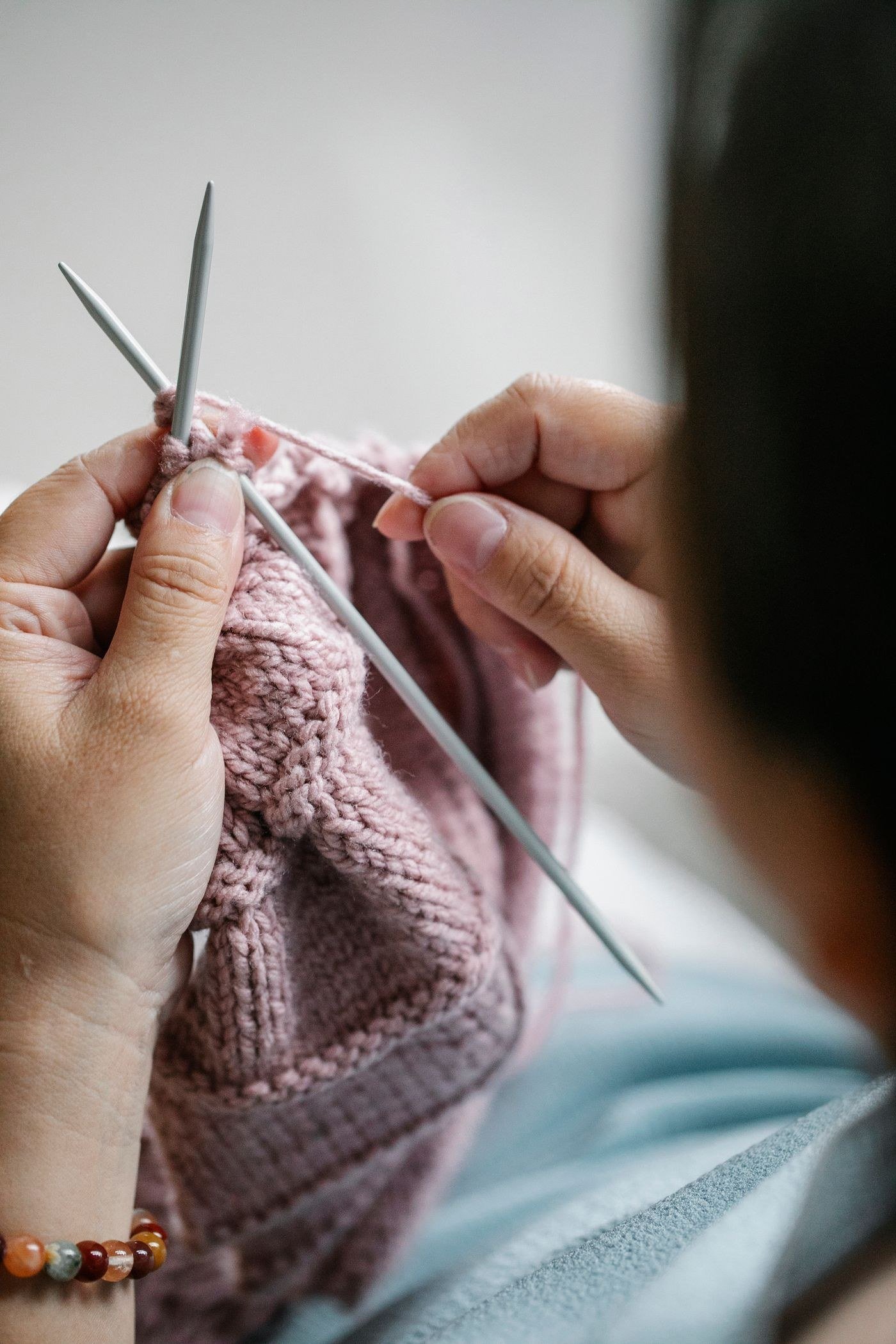
A few features separate a genuinely hand-friendly hook from one that just looks fancy:
A soft, cushioned handle. Look for a handle wrapped in silicone, rubber, or a soft-touch grip material rather than bare metal or hard plastic. The cushioning absorbs pressure instead of transferring it straight into your joints.
A wider handle shape. A slim handle forces your fingers to pinch tightly to keep it steady. A wider, often flattened or oval handle gives your hand more surface to rest against, so you can hold it with a lighter, more relaxed grip.
Light weight or good balance. A hook that feels heavy or top-heavy makes your hand work harder just to keep it steady, stitch after stitch. Look for something that feels evenly weighted in your hand, not just cushioned.
A smooth, well-shaped head and throat. The working end (the head and throat where you catch the yarn) should let the yarn glide on and off smoothly. A rough or oddly shaped head makes you grip tighter and yank more to pull stitches through, which adds strain you do not need.
A size that matches your project. The handle can be perfect and still feel wrong if the hook head itself is not the right size for your yarn and pattern. Match the hook size to the yarn weight you are using first, then look for that size in an ergonomic version.
Ergonomic Handle Sets vs. Single Hooks – Who Each Suits
You will generally find two ways to buy an ergonomic hook: a full set with an interchangeable or fixed handle covering a whole range of sizes, or a single hook in just the one size you use most.
Sets make sense if you crochet a variety of projects, from fine cotton doilies to bulky blankets, and want every size to feel the same comfortable way in your hand. They are also a practical way to try ergonomic grips for the first time, since you get a full range to test without guessing which size you will reach for most.
Single hooks make sense once you already know your go-to sizes, usually just one or two, for the projects you make most often. Buying single hooks in a favorite size and finishing style can also work out cheaper per hook than a full set, and it lets you mix and match, for example a soft ergonomic handle in your everyday size alongside your existing plain hooks for occasional sizes.
Don’t Overlook Hook Size and Tension
Ergonomics are not only about the handle. If your hands are aching, it is also worth trying a slightly larger hook than a pattern calls for, along with a looser tension. A bigger hook means less tight, repetitive gripping to force the yarn through each stitch, and looser tension means your fingers are not fighting the yarn as hard on every single motion. Your finished fabric will be a little more open and drapey, which is a fair trade for hands that do not hurt afterward. If you are working from a written pattern, sizing up a millimeter or so and easing your grip is a simple, no-cost way to test whether tension, not just the hook itself, is part of your pain.
Habits That Help as Much as the Hook
Even the best ergonomic hook will not undo strain from bad habits, so pair your gear with a few small changes:
Take real breaks. Set a timer for every twenty to thirty minutes and put the project down, even for a minute. Repetitive motion injuries build up from duration, not just intensity.
Stretch before and after. A few gentle wrist circles, finger stretches, and a light shake-out of the hands go a long way, especially before a long crochet session.
Warm up cold hands. Stiff, cold joints grip harder without you noticing. Running your hands under warm water or doing a light hand massage before you start can genuinely reduce strain.
Watch your grip pressure, not just your hook. Many crocheters hold a hook far more tightly than the stitch actually requires, out of habit. Periodically check in and consciously loosen your hold.
By Type: Matching a Hook to Your Needs
Ergonomic single hooks are the simplest starting point if you already have a favorite size or brand of regular hook and just want to test a cushioned grip without committing to a whole set.
Interchangeable ergonomic sets suit makers who work across many yarn weights, since you get a consistent, comfortable handle no matter what size head you swap in.
Hooks with larger, rounded heads can help if your pain is more about pinching small objects than about the handle itself, since a slightly bigger, smoother head needs less fine-motor pinching to control.
Lightweight wood or bamboo hooks are worth a look if metal feels cold or slick in your hands, since wood warms up quickly and often has a bit more natural grip texture, even without a cushioned handle.
The Honest Bottom Line
There is no single “best” ergonomic hook that fixes every hand, because pain shows up differently for everyone; some people need cushioning, some need a lighter hook, some just need a bigger head to reduce pinching. The good news is that ergonomic hooks are inexpensive enough to test a couple of styles before settling on a favorite. If your hand pain is frequent, severe, or getting worse, gear alone is not a substitute for talking to a doctor or an occupational therapist, both of whom can offer guidance specific to your joints. For everyday aches, though, a better hook, a slightly bigger size, a looser tension, and a few real breaks can make crochet feel like a relaxing hobby again instead of something you have to recover from.
Frequently asked questions
Can switching to a bigger hook change how my finished project turns out?
Yes, sizing up creates a looser, more open fabric with a different drape than the pattern’s original gauge, so it suits comfort projects like blankets well but is less ideal for anything needing an exact finished measurement, like a fitted garment.
Are wooden or bamboo hooks automatically better than metal ones for arthritis?
Not automatically. Wood warms quickly and has natural grip texture, which some people find easier on sore joints than cold metal, but a slim wooden handle still causes the same pinching problem as a slim metal one.
How often should I actually take breaks if my hands start hurting mid-project?
Aim for a short break every twenty to thirty minutes, even just to set the project down and stretch, since repetitive strain builds up from how long you hold a position, not from any single stitch.
Is it worth trying a different way of holding the hook, not just a different hook?
Yes, some people find a knife grip, holding the hook like a knife, easier on the joints than a pencil grip, or the reverse, so it is worth testing both to see which puts less strain on your particular hands.
Should I stop crocheting entirely if I have diagnosed arthritis?
Not necessarily. Many people with arthritis keep crocheting comfortably by combining an ergonomic hook, a slightly bigger size, and regular breaks, but it is worth talking to your doctor or an occupational therapist about what is safe for your specific hands.
— NoraEvery pattern hand-tested