What Is Amigurumi? (The Little Toys Taking Over Crochet)
Scroll through almost any crochet feed lately and you will run straight into them: tiny crocheted mushrooms with spotted caps, fuzzy little bees…

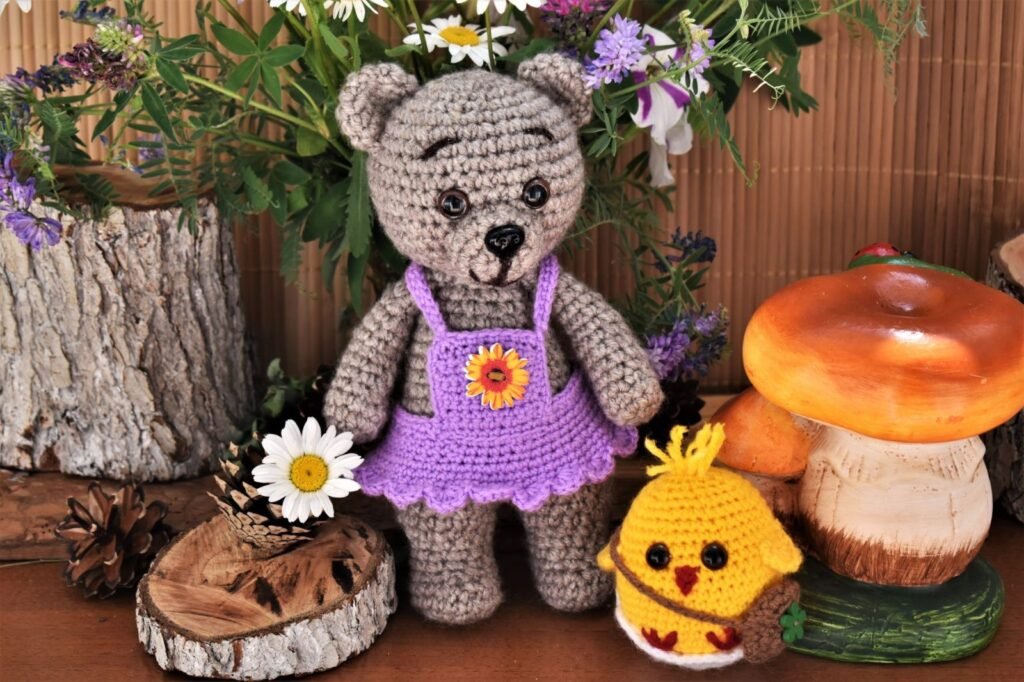
Scroll through almost any crochet feed lately and you will run straight into them: tiny crocheted mushrooms with spotted caps, fuzzy little bees, wide-eyed frogs, jellyfish with curling tentacles. These small stuffed creatures have a name, and if you have been wondering what it is and whether you could make one yourself, the answer is yes, and it starts with understanding one simple word: amigurumi.
Jump to section
What Does “Amigurumi” Actually Mean?
Amigurumi is a Japanese word, built from two parts: “ami,” meaning crocheted or knitted, and “nuigurumi,” meaning stuffed doll. Put together, it translates roughly to “crocheted or knitted stuffed toy,” and that is exactly what it describes: small, stuffed creations made from yarn, usually depicting animals, food, plants, or cute invented characters.
Technically, amigurumi can be either crocheted or knitted, since the word itself does not specify the technique. In practice, though, crochet is by far the more common method today, for a very practical reason covered in the next section: single crochet fabric is naturally dense and structured in a way that suits small stuffed shapes far better than knitting does.
The Technique Behind the Cuteness
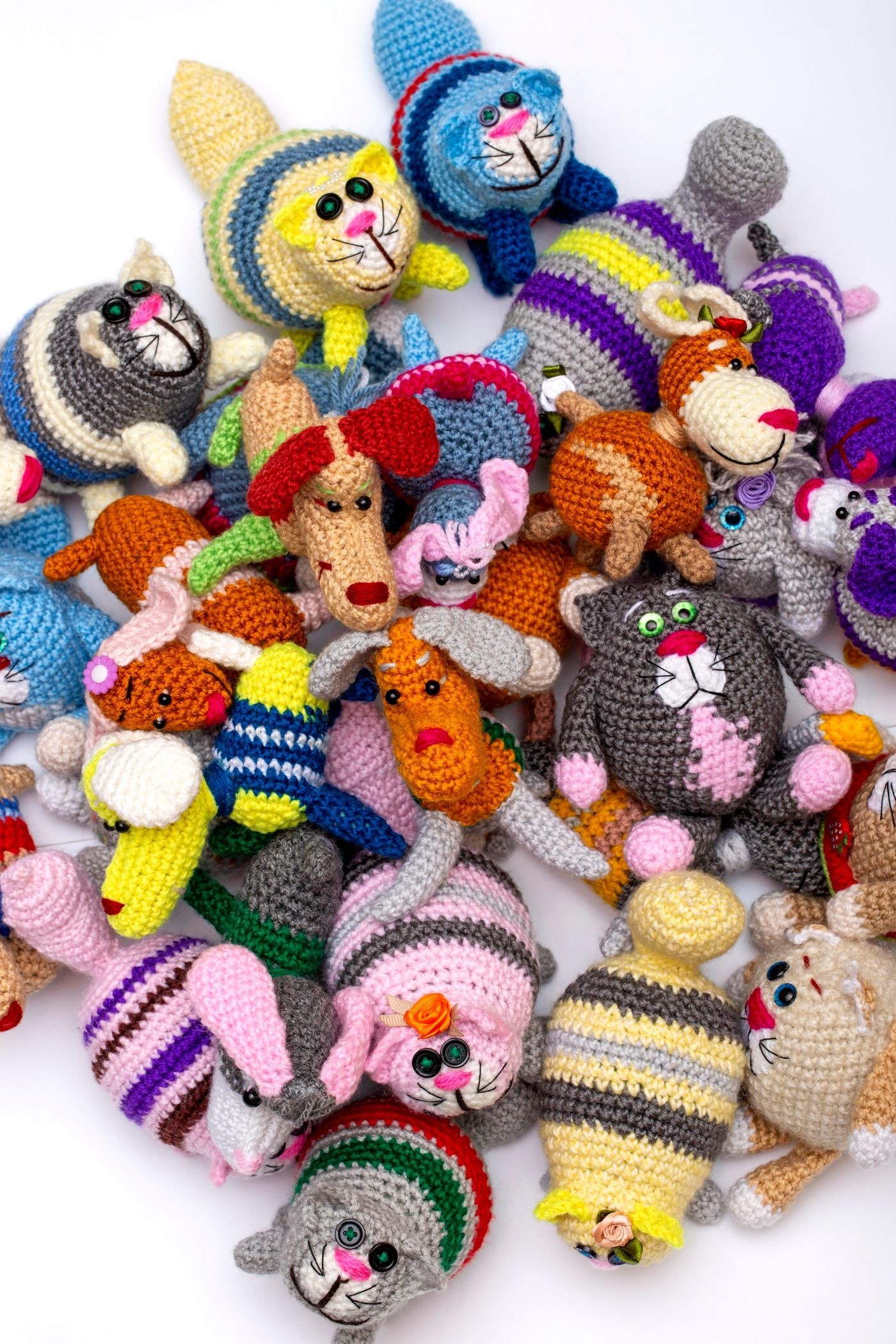
Amigurumi has a distinctive look and feel, and it comes down to a specific way of working. Pieces are made in tight, continuous spirals of single crochet, usually on a hook a size or two smaller than the yarn label recommends. Quick abbreviation note: sc means single crochet, made by inserting your hook into a stitch, yarn over, pulling up a loop, yarning over again, and pulling through both loops on your hook.
Working tightly, on a smaller hook than usual, closes up the small gaps that single crochet naturally leaves between stitches. That matters enormously for a stuffed toy, since a looser fabric would let the white fluff of the stuffing peek through between stitches, ruining the clean look. A tight, dense fabric holds its stuffing invisibly and keeps its shape firm, even in small pieces like fingers, ears, or antennae.
The “continuous spiral” part is just as important as the tight tension. Rather than joining each round with a slip stitch and chaining up to start the next one, the way many other crochet-in-the-round projects work, amigurumi rounds simply spiral continuously into each other with no join at all. A stitch marker keeps track of where each round begins and ends, since there is no slip-stitch join to mark it visually. Working this way avoids a visible seam line running up the piece, which keeps the finished shape looking smooth and unbroken all the way around.
Why Amigurumi Exploded in Popularity
Amigurumi’s roots trace back to Japan’s broader “kawaii,” or cute, aesthetic, which has shaped everything from character design to packaging for decades. Small, round-faced, big-eyed stuffed creatures fit naturally into that visual culture, and amigurumi has been a beloved part of Japanese craft culture for a long time as a result.
More recently, the craft found a second life online. Short-form video platforms like TikTok and Instagram turned amigurumi into something genuinely viral, since a small creature coming together stitch by stitch in a sped-up video is instantly satisfying to watch, even for people who have never picked up a hook. That online momentum has only grown, and by 2026 amigurumi has become a full-blown craze, with cottagecore-leaning, nature-themed designs like mushrooms, bees, frogs, and jellyfish among the most popular subjects on maker feeds everywhere.
What a Beginner Needs to Start
You do not need much to make your first amigurumi, which is part of its appeal. Here is the short list:
Yarn. A smooth worsted (#4) weight yarn, in either cotton or acrylic, works best. Smooth yarn keeps your stitches easy to see and count, which matters far more in amigurumi than in most other crochet, since you are constantly tracking increases and decreases.
A small hook. Choose a hook one to two sizes smaller than what the yarn label recommends, to get that tight, stuffing-proof fabric discussed above.
Polyester fiberfill stuffing, the same kind used for pillows and plush toys, to fill out your finished pieces.
Safety eyes or embroidery floss for a face. Plastic safety eyes with locking washers give a classic amigurumi look, but they are a choking hazard and are not appropriate for anything meant for a baby or very young child. Embroidered eyes, stitched on with floss, are the safer choice for anything a little one will handle.
A stitch marker, to track the start of each round as you spiral continuously around.
A yarn needle and small scissors, for closing up pieces, sewing them together, and weaving in ends.
The Core Skills You Will Actually Use
A handful of techniques show up in nearly every amigurumi pattern, so learning them once pays off across dozens of future projects:
The magic ring (also called a magic circle). This is an adjustable loop you start a round with, and it closes up tight with no hole in the center once you pull the tail, unlike a simple chain-and-join start, which often leaves a small gap.
The sc spiral, described above, forms the bulk of most amigurumi pieces from start to finish.
Increases and decreases. Working two sc into one stitch (an increase) widens a piece, while working two stitches together as one (a decrease) narrows it. Combining rounds of increases, straight rounds, and decreases is how a flat circle becomes a rounded sphere, and how spheres become the heads, bodies, and limbs that make up a finished toy.
Stuffing as you go. Rather than stuffing only at the very end, most amigurumi makers add small amounts of fiberfill gradually as a piece grows, which fills the shape more evenly and avoids lumps or thin spots.
Where to Start
If this all sounds appealing, the best move is simply to make one small, simple shape first, like a basic sphere or a single small character with a round body and a few short limbs, rather than jumping into an elaborate design right away. The magic ring, the spiral, and basic increases and decreases show up in almost every pattern, so one small finished project teaches you nearly everything you need for the next one.
The Payoff
There is a particular kind of satisfaction in holding your very first finished amigurumi: a handful of simple stitches, a bit of stuffing, and suddenly there is a small creature with a face looking back at you. That moment is exactly why the craze shows no sign of slowing down, and it is entirely within reach for a beginner willing to learn just a few core skills. Pick your favorite little creature, whether it is a mushroom, a bee, or a jellyfish, and give it a try. Your first one will not be your last.
Frequently asked questions
Do I need to know a lot of crochet stitches before trying amigurumi?
No, amigurumi relies almost entirely on single crochet along with increases and decreases, so knowing just those few stitches is enough to make a simple first amigurumi.
Can I make amigurumi by knitting instead of crocheting?
Technically yes, since the word amigurumi covers both crocheted and knitted stuffed toys, but crochet is far more common because its dense, tightly spiraled fabric holds stuffing and shape much better than knit fabric does.
Why does my amigurumi piece have a small hole at the very top or bottom?
That usually comes from starting with a chain-and-join circle instead of a magic ring, which leaves a small center gap. Switching to a magic ring closes that hole completely once you pull the tail tight.
How do I keep track of rounds without a slip-stitch join marking where each one starts?
Place a stitch marker in the first stitch of a round and move it up each time you pass it, since amigurumi spirals continuously with no visible seam to show you where a round begins or ends.
Are plastic safety eyes okay to use on amigurumi made for a baby or toddler?
No, plastic safety eyes with locking washers are still a choking hazard for young children even though they lock in place. Embroidered eyes stitched with floss are the safer choice for anything a baby or toddler will handle.
— NoraEvery pattern hand-tested