Why Is Crochet So Expensive? (The Honest Answer)
You spot a hand-crocheted beanie online for fifty-five dollars and your first thought is honest: "it's just yarn and a hook, why is this so expensive?"…

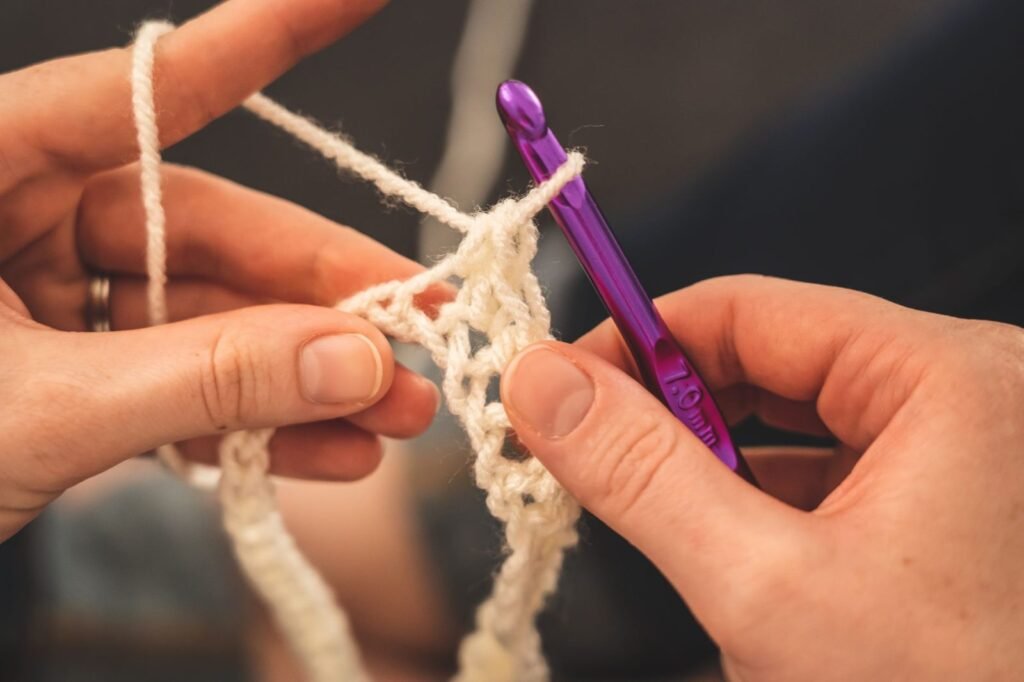
You spot a hand-crocheted beanie online for fifty-five dollars and your first thought is honest: “it’s just yarn and a hook, why is this so expensive?” It’s a fair question, and it deserves a fair answer instead of a defensive one. Once you understand what actually goes into an hour of crochet, and how different that is from most of what you buy, the price stops looking strange and starts looking closer to fair.
Jump to section
It Is Priced for Hours, Not Materials
Materials matter, but they are rarely the biggest number in the equation. A skein of good yarn might run you ten or fifteen dollars. The time it takes a skilled pair of hands to turn that skein into a finished, wearable object is the real cost, and crochet eats time in a way a lot of other crafts do not.
A simple beanie can take several hours from first stitch to woven-in end, even for someone who has made dozens of them. A blanket is a different animal entirely. Depending on the size, the yarn weight, and the stitch pattern, a full-size throw blanket can reasonably take somewhere in the range of twenty to forty-plus hours of actual hook-in-hand work. That is not a rushed weekend project. That is many evenings, stitch after stitch, by one person.
The One Craft No Machine Can Make
Here is the detail that changes the whole conversation: crochet is, as far as the fiber industry has ever documented, the one popular handcraft that has never been successfully mechanized. Knitting machines have existed for centuries, from hand-cranked home machines to massive industrial ones, which is exactly why a knit sweater can be manufactured by the thousands and sold cheaply. Crochet works differently. Each stitch is formed by a single hook pulling a single loop through fabric in a specific, hand-guided sequence, and no machine has ever been built that replicates that motion at any real commercial scale.
That means every genuinely crocheted item you have ever seen, no matter how simple the pattern, was made one loop at a time by an actual person. There is no factory version. There is no shortcut. If it is real crochet, a human made it, full stop.
So Why Does “Cheap Crochet” Show Up Online Anyway
This is where it gets a little uncomfortable, and also where the honesty matters most. If crochet cannot be mass-produced by machine, how is there so much suspiciously cheap “crochet” for sale online? The honest answer is that most of it is not actually crochet at all. It is machine-knit fabric engineered to mimic the look of crochet, sometimes convincingly, using knitting machines that can copy a granny-square texture or a lacy pattern without a hook ever being involved.
That is not necessarily a scam in a legal sense, since plenty of sellers are simply using loose language, but it does mean you are comparing two very different products when you set a five-dollar “crochet” cardigan next to a hand-crocheted one at ten times the price. One took a machine minutes to produce. The other took a person days. If you want to tell them apart, look closely at the stitch texture in photos: real crochet has small, natural irregularities from row to row, while machine-knit imitations tend to look almost too perfectly uniform. A price that seems impossibly low for the hours claimed is usually the biggest tell of all.
Doing the Math on a “Fair” Price
Try this rough exercise with any handmade listing. Take the price, subtract a reasonable estimate for the yarn and any notions, and divide what is left by the hours the maker says it took. A beanie priced at fifty-five dollars, with maybe ten dollars of yarn in it and three hours of work, leaves fifteen dollars an hour for the labor, before you even count the unpaid time spent sourcing yarn, packaging the order, and photographing and listing it for sale.
Now scale that up to a blanket. A throw priced at two hundred fifty dollars, with sixty dollars of yarn and thirty hours of work, works out to roughly six to seven dollars an hour for the maker’s actual skilled labor. Run the numbers on almost any handmade crochet listing you find and you will usually land somewhere similar: a price that feels high to a buyer, but that still pays the maker well under minimum wage once every hour is honestly counted. This is not a rare exception. For independent crochet sellers, it is closer to the norm.
Reframing “Expensive” as “Fairly Valued”
Once you have done that math, “expensive” starts to feel like the wrong word entirely. A more honest way to describe a well-priced handmade crochet item is “fairly valued,” because a fair price for real crochet is one that actually compensates the hours involved, even when that price still lands below what the maker’s time is technically worth by any standard hourly measure.
This reframe matters because “expensive” implies the price is inflated above what something is worth. In handmade crochet, the far more common problem runs the opposite direction: makers routinely underprice their own work, because they know shoppers are used to comparing everything against mass-produced, machine-made goods. When you pay what a piece is actually asking, you are rarely overpaying. You are usually still getting a bargain relative to the real hours inside it.
What You Are Actually Paying For
When you buy a genuinely handmade crocheted piece, you are paying for years of practiced skill that let someone work quickly and evenly instead of slowly and unevenly. You are paying for hours of someone’s undivided attention, given to one object, by hand, with no shortcuts available even if they wanted one. You are paying for a maker’s own judgment about yarn choice, tension, and finishing, all the small decisions a machine could never make. And you are paying for something that, by the nature of the craft itself, could never have been made any other way.
The Payoff
The next time a crocheted price tag makes you raise an eyebrow, try running the hours in your head first. A beanie is several hours of someone’s evenings. A blanket is dozens. None of it came off a production line, because it could not have. That is not a marketing line crafters use to justify their prices, it is simply how the math works out when a real person, one loop at a time, made the thing you are holding. Fairly valued is the more honest phrase, and it is one worth remembering the next time you are tempted to ask a maker to lower their price.
Frequently asked questions
Is crochet actually slower to make than knitting, or is that just a myth?
It is not a myth in the sense that matters for pricing: knitting can be done by machine at industrial speed, while every crochet stitch still has to be formed by hand, one loop at a time. That difference in mechanization, not a difference in the stitches themselves, is why hand-knit items can often be produced and sold more cheaply.
Since handmade crochet is usually already underpriced, is it rude to ask a maker for a discount?
Given that most sellers are already earning well under a fair hourly wage once yarn and hours are counted honestly, asking for a discount is asking someone to work for even less. If the price feels high, it is worth doing the hours-and-materials math from the piece before assuming it is overpriced.
Does using pricier yarn automatically make a finished piece more valuable?
Better yarn raises the materials cost, but the bigger factor in a fair price is almost always the hours of labor involved, not the yarn itself. A simple beanie in luxury yarn and one in budget yarn still take roughly the same number of hours to make, so labor stays the main driver of price either way.
Why do prices vary so much between sellers for what looks like a similar handmade item?
Differences in stitch pattern, yarn weight, and the maker’s own speed all change the real hours behind a piece, even when two items look similar in photos. A denser stitch pattern or a slower, more careful maker will reasonably cost more than a faster, simpler version of what looks like the same object.
If I want to start selling my own crochet, how do I figure out a fair price?
Track your actual materials cost and your real hours on a piece, then price so your labor comes out to at least a reasonable hourly rate rather than an afterthought. Running that same math on a few similar handmade listings from other sellers is also a useful gut check before you settle on a number.
— NoraEvery pattern hand-tested