How to Treble Crochet (tr) for Beginners
Once you are comfortable with single and double crochet, the treble crochet (also called triple crochet, abbreviated tr) is a natural next stitch to…

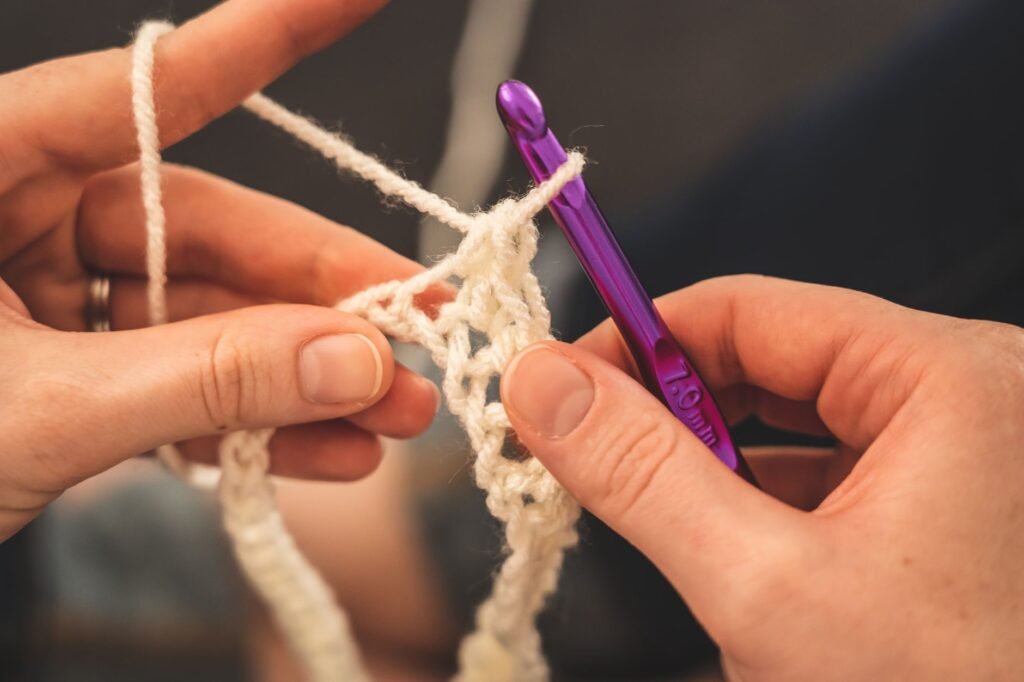
Once you are comfortable with single and double crochet, the treble crochet (also called triple crochet, abbreviated tr) is a natural next stitch to learn. It looks intimidating because of the extra loops on your hook, but it is really just one more step added onto stitches you likely already know. It also happens to be one of the fastest ways to build height and open, airy texture into your work. Let’s slow it down and go through it one motion at a time.
Jump to section
What Makes Treble Crochet Different
Every taller crochet stitch is built the same basic way: wrap the yarn over your hook a certain number of times before you insert it into the stitch, then work back through your loops in pairs. The number of wraps is what changes the stitch:
- Single crochet (sc) – no yarn over (yo) before inserting the hook; the shortest common stitch.
- Half double crochet (hdc) – one yo before inserting the hook.
- Double crochet (dc) – one yo before inserting, but resolved in two separate pull-throughs.
- Treble crochet (tr) – two yo’s before inserting the hook. This is the tallest of the stitches you will use regularly, and it is what we are learning today.
The word “stitch” gets shortened to st throughout patterns, so “next st” just means the next stitch in your row.
How to Work a Treble Crochet, Step by Step
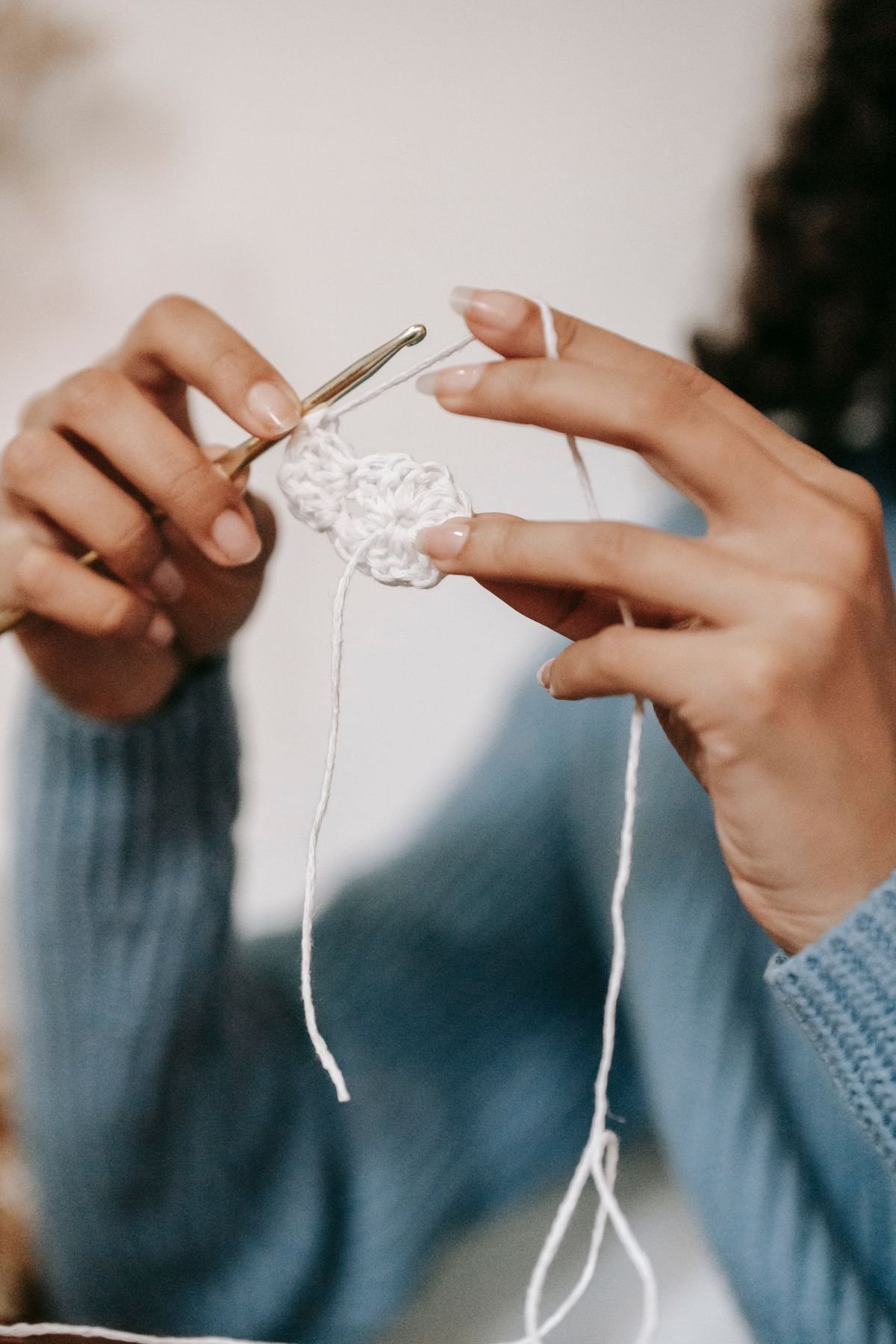
Here is the full motion, broken all the way down:
1. Yarn over (yo) twice. Wrap the yarn over your hook, then wrap it over again, before you touch the next stitch. You should now have your working loop plus two fresh wraps sitting on your hook. 2. Insert your hook into the next stitch (st). 3. Yarn over (yo) and pull up a loop. You are pulling a new loop through the stitch only, not through anything else yet. At this point you will have 4 loops on your hook – the two wraps from step 1, plus your original loop, plus the new loop you just pulled up. 4. Yarn over, pull through 2 loops. This is one motion: wrap the yarn, then pull it through just the first two loops on your hook. You now have 3 loops left. 5. Yarn over, pull through 2 loops again. Down to 2 loops left. 6. Yarn over, pull through 2 loops a third time. This brings you down to 1 loop on your hook, and your treble crochet stitch is complete.
So the full rhythm, once you know it, is: yo, yo, insert, yo, pull up a loop (4 loops), then [yo, pull through 2] three times until one loop remains. Counting those three pull-through steps out loud in your head is the easiest way to avoid losing your place, especially when you are new to the stitch.
The Turning Chain for Treble Crochet
When you are working tr in rows, you need a turning chain (a small chain worked at the start of the row) to bring your hook up to the correct height before your first real stitch. For treble crochet, that turning chain is ch 4.
This turning chain usually counts as the first tr of the new row. That means when you turn your work and chain 4, you then skip the first stitch at the base of your row and work your next actual tr into the second stitch instead. At the far end of the row, you work your final tr into the top chain of the previous row’s turning chain, so it gets counted as a real stitch too. Skipping this step is one of the most common ways beginners lose or gain stitches without realizing it, so it is worth double-checking your first few rows against your pattern’s stitch count.
For comparison, since you may already know the shorter stitches: the standard turning chain is ch 1 for sc, ch 2 for hdc, ch 3 for dc, and ch 4 for tr. The taller the stitch, the taller the turning chain needs to be to match it.
Why Treble Crochet Looks and Feels Different
Because a tr stitch has more wraps and more height than sc, hdc, or dc, it naturally leaves a bigger gap between the top of one stitch and the top of the next. That gap is what gives treble crochet fabric its signature open, airy, lacy look, instead of the dense, solid look you get from single crochet. It also means a tr row eats up height fast – you will finish a blanket or a shawl in noticeably fewer rows using tr than you would with shorter stitches.
That combination of speed and openness is exactly why you will see tr used in:
- Lacy shawls and wraps, where drape and see-through texture matter
- Table runners and doilies that need structure without density
- Filet-style and mesh patterns, often paired with chains between stitches
- Motifs and mandalas, where tall stitches create dramatic petal or spoke shapes
- Any project where you want fast, dramatic height without a lot of stitches
Common Treble Crochet Mistakes
- Forgetting one of the two yarn overs. If you only wrap once before inserting your hook, you will end up making a double crochet instead of a treble, and your row will come out shorter than it should.
- Losing track of the “yo, pull through 2” repeats. Since you do this three separate times, it is easy to stop one step early (leaving 2 loops on your hook instead of 1) or to lose count and do it an extra time. Slow down and check your loop count after each pull-through until it becomes automatic.
- Skipping the turning chain math. Forgetting that the ch 4 counts as your first stitch (or forgetting to work into the top of the previous turning chain at the end of the row) will slowly shift your stitch count from row to row.
- Working too tightly. Treble crochet is meant to look open and relaxed. If your tension is very tight, you lose the airy quality that makes the stitch worth using in the first place. Let the stitch stay a little loose and loopy.
Try It Yourself
Chain 20, then turn and chain 4 more (your turning chain). Skip the first stitch from your hook, and work a tr into each stitch across, remembering to place your last tr into the top of your starting chain. Turn, chain 4 again, and repeat for a few rows. Within one small swatch, you will feel the rhythm settle into your hands – and once it does, treble crochet becomes one of the fastest, most satisfying stitches in your whole toolkit.
Frequently Asked Questions
How is treble crochet different from double crochet?
Double crochet starts with one yarn over before inserting the hook, while treble crochet starts with two. That extra wrap and the extra pull-through it requires make treble crochet noticeably taller and more open than double crochet.
What is the most common mistake when learning treble crochet?
Forgetting one of the two starting yarn overs is the most common slip, since it quietly turns the stitch into a double crochet and shortens the row. Losing track of the three “yarn over, pull through 2” steps is a close second.
Why does my treble crochet fabric look holey or uneven?
Treble crochet is naturally more open than shorter stitches because of the taller stitch structure, so some gap between stitches is expected. If the fabric looks uneven rather than evenly open, check that your turning chain is being worked and counted consistently row to row.
Do I always need a chain 4 turning chain for treble crochet?
Yes, when working tr in rows, a chain 4 is the standard turning chain used to bring your hook up to the right height, and it typically counts as the first treble crochet of the row.
— NoraEvery pattern hand-tested