Why Is It Called a Granny Square? (The Surprising History)
Ask any crocheter where the granny square got its name, and you will probably hear a version of the same story: a frugal grandmother, decades ago…


Ask any crocheter where the granny square got its name, and you will probably hear a version of the same story: a frugal grandmother, decades ago, stitching leftover scraps of yarn into cheerful little squares rather than throwing them away. It is a lovely image – and it is almost entirely wrong. The real history of the granny square is older, stranger, and honestly more interesting than the scrap-yarn legend, and it involves a farm publication, a fashionable Victorian trend, and a name that took roughly seventy years to catch on.
Jump to section
A Motif With No Name Yet
The square-within-a-square design we now call a granny square did not start life as a beginner‘s scrap project, and it definitely did not start with that name. The earliest known published pattern for this style of square crochet motif appeared in the 1880s, around 1885, printed in an American farming publication of the kind that carried crochet and needlework patterns alongside crop reports and household tips for rural readers. At that point, the design had no catchy nickname at all. It was simply a crochet motif, one of many square and round patterns circulating through the needlework pages of the era, decades before anyone thought to call it “granny” anything.
Good Wool, Not Leftover Scraps
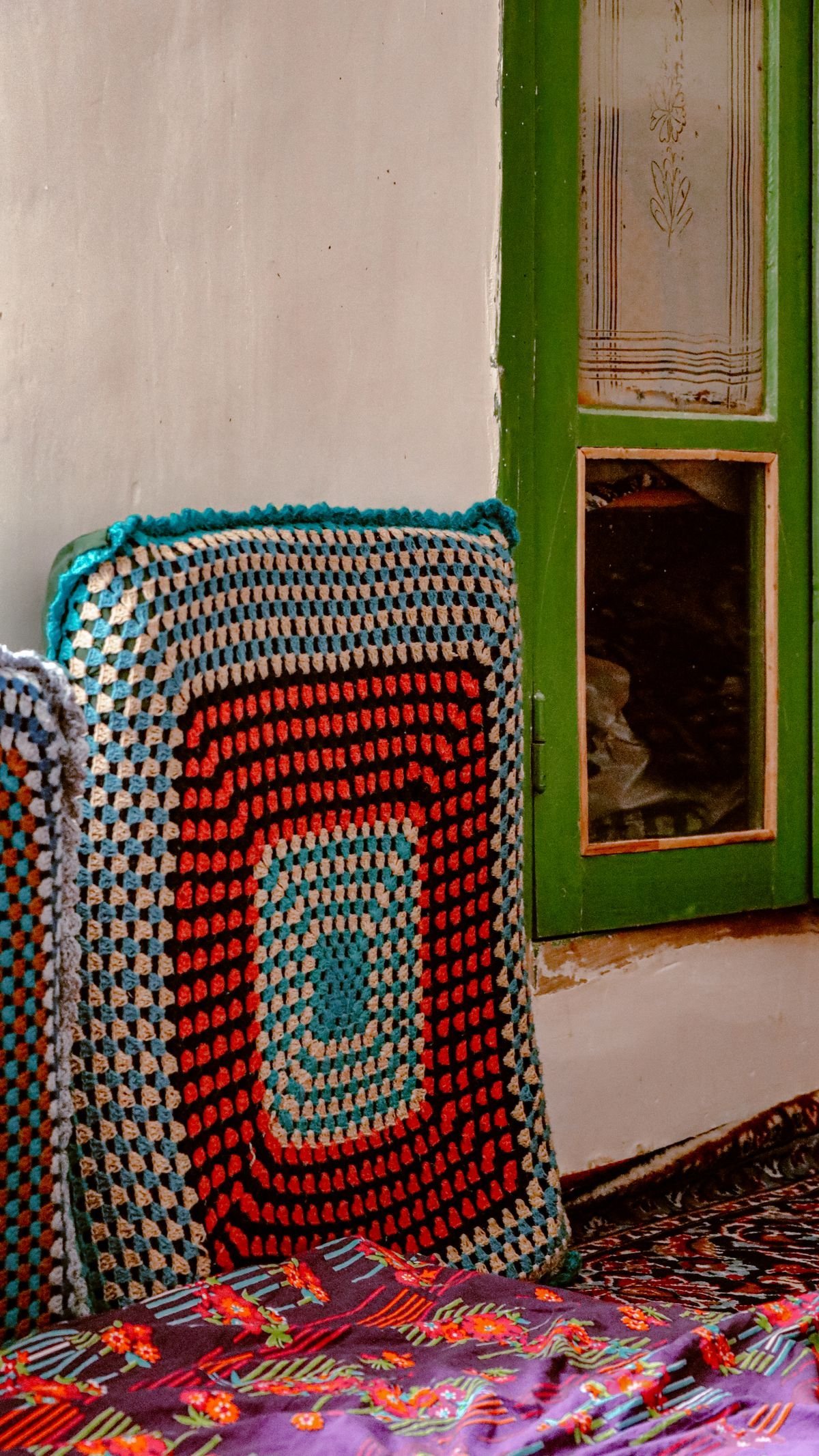
Here is the detail that surprises almost everyone: this square was not originally a scrap-yarn craft. It was worked in good, solid-color wool, and it was styled as a deliberate echo of one of the fashionable looks of the day, the “crazy quilt.” Crazy quilts were an elaborate Victorian patchwork trend built from oddly shaped fabric pieces, richly embroidered and stitched together into a deliberately busy, ornate design that showed off a maker’s skill. Early square crochet motifs borrowed that same patchwork spirit, but expressed it in wool and stitches rather than fabric and thread. It was a fashionable, carefully considered project for its time, not a thrifty way to use up odds and ends left over from something else.
That single fact reframes the whole square. The motif’s earliest identity was about showing skill and following a trend, not about frugality, and that identity held for a long time before anything about “using up scraps” became part of the story most people tell today.
It is worth pausing on just how popular the “crazy quilt” look was at the time, because it explains why a wool version of the idea would have appealed to needleworkers in the first place. Crazy quilting was everywhere in the late 1800s, a way for women to show off both their fabric collection and their embroidery skill in one deliberately ornate piece. A crocheted square built from tidy, repeating clusters and worked in solid wool was not trying to look thrifty at all. It was trying to look fashionable, carefully made, and worth the time it took, which is a very different goal than “make something out of nothing.”
Seventy Years Without a Name
For decades, this motif simply did not have the name we know today. It traveled through pattern books and needlework magazines under generic labels, worked by crocheters who had no idea they were making anything called a “granny” square, because that word had not attached itself to the design yet. It was not until around 1953, close to seventy years after that first known published pattern, that the term “granny square” actually caught on and stuck in everyday use. Sit with that gap for a moment: the motif itself is pushing 140 years old, but it has only carried the name “granny square” for roughly half of that time. For most of its life, this exact pattern of clusters and corner spaces existed and was crocheted by plenty of people, entirely nameless in the way we would recognize it today.
Known in Europe as “American Crochet”
While American crocheters were working this square motif under one generic label or another, it was also making its way across the Atlantic, where, for a stretch of time, it was sometimes known in parts of Europe simply as “American crochet.” That name is a useful reminder that the square motif traveled internationally long before it picked up the folksy, familiar name that eventually won out everywhere. It had already crossed an ocean and earned a nickname of its own on a different continent, well before “granny square” became the label crocheters everywhere would recognize instantly.
Where the Scrap-Yarn Legend Actually Comes From
If the square started life in good wool as a fashion statement, where did the leftover-scraps story come from at all? The honest answer is that nobody can point to one exact moment it was invented, but it is not hard to see how it took hold. Once the motif had been around for generations, and once affordable, colorful acrylic yarn became widely available in the twentieth century, plenty of real grandmothers really did use the square to work through their leftover odds and ends, precisely because a small motif like this is such a forgiving way to use up a partial skein. That later, very real habit is easy to mistake for the square’s original purpose, especially once the “granny” name was already attached to it and the frugal-grandmother image practically wrote itself. The legend is not a total fabrication so much as a later chapter of the story, mistaken for the whole book.
So Why “Granny”?
Once the name “granny square” did settle into common use, it turned out to be the label that stuck for good, and the likely reasons behind it are more practical than sentimental. The square is easy to learn, worked in small, portable rounds that do not demand much setup or a bulky project bag, and gentle on the eyes since you are rarely tracking more than a handful of stitches at any one time. Those are exactly the qualities associated with a relaxed, unhurried way of crocheting: the kind of small, forgiving, low-fuss project a grandmother figure might pick up between other tasks, set down easily, and return to without losing her place. The name was likely never really about who invented the motif or who first used up their leftover scraps in it. It described how comfortable and approachable the project felt to actually sit down and make, which is a very different origin story than the one most people repeat.
The Square That Refused to Disappear
What makes this history worth knowing is not just trivia for its own sake – it reframes the granny square as something more interesting than a thrifty afterthought. It started as a fashionable wool motif echoing a Victorian patchwork trend, spent decades circulating in pattern books without its now-famous name, picked up an international nickname along the way, and only became “granny” once crocheters needed a word for how easy and portable it felt to make. Almost a century and a half after that first known pattern, it is still one of the very first things most beginners learn today, still turning up in blankets, bags, and garments in every color combination imaginable. Next time you pick up a few colors of yarn and start a square, you will know you are continuing a project with a much longer, much stranger past than its cozy nickname ever let on.
Frequently Asked Questions
When was the first granny square pattern published?
The earliest known published pattern for this style of square crochet motif appeared in the 1880s, around 1885, in an American farming publication.
Was the granny square originally made from leftover scrap yarn?
No. It was originally worked in good, solid-color wool as a deliberate echo of the fashionable Victorian “crazy quilt” trend, not as a way to use up odds and ends.
When did the name “granny square” become popular?
The term caught on and stuck in everyday use around 1953, roughly seventy years after the motif’s first known published pattern.
Was the granny square known by a different name in Europe?
Yes. For a stretch of time it was sometimes known in parts of Europe simply as “American crochet.”
— NoraEvery pattern hand-tested