How to Fix Crochet Mistakes (Frogging and Unraveling)
Every single person who has ever picked up a hook has made a mistake mid-project. A missed stitch, an accidental extra one, a whole row worked in the…


Every single person who has ever picked up a hook has made a mistake mid-project. A missed stitch, an accidental extra one, a whole row worked in the wrong stitch pattern because you were half-watching a show. It happens to beginners and to crocheters who have been at this for decades. The good news, and it is genuinely good news, is that yarn is forgiving. Nothing about a crochet mistake is permanent, and the tools for fixing one are simple enough to learn in a single sitting.
Jump to section
First: Nothing Is Ruined
Before we get into how, it is worth saying plainly: your project is not ruined and your yarn is not wasted. Crochet is made of one continuous strand looped through itself over and over. Pull that strand, and the loops release. The yarn goes right back to being plain yarn, ready to be worked again. The only real cost of fixing a mistake is a little time, not materials, and not your skill.
A couple of terms we will use throughout: st (stitch) and sc (single crochet), just for the examples below.
Frogging: The Big Undo
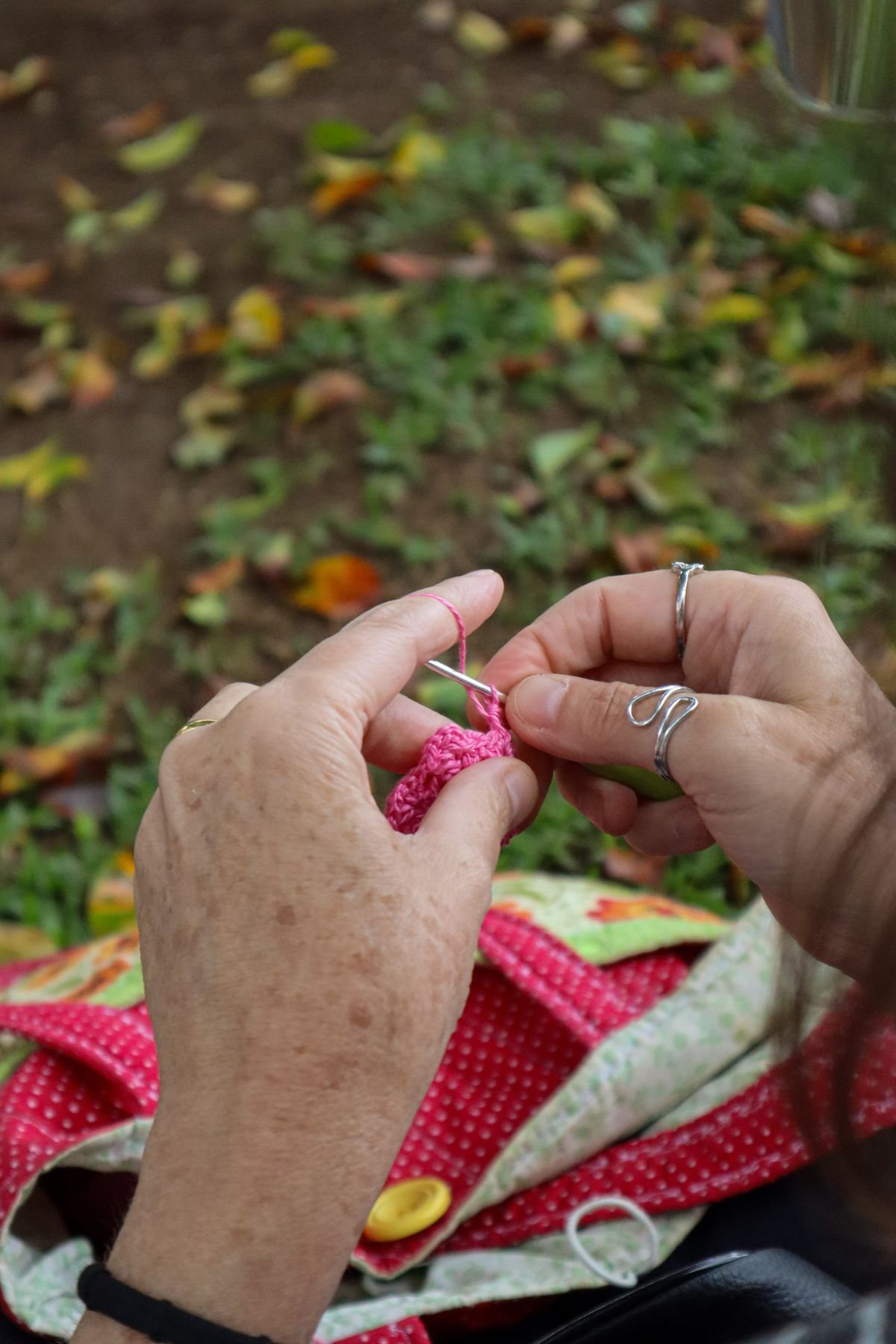
If you need to undo a large section, several rows or even an entire piece, the method almost every crocheter reaches for is called frogging. The name comes from a pun: you are going to “rip it, rip it,” which sounds a little like a frog’s croak, and the nickname stuck.
Frogging means pulling your work apart by tugging on the working yarn, the strand still attached to your ball, and letting the stitches release and unravel as you pull. Here is how to do it safely:
1. Remove your hook from the live loop. You do not need it while you unravel. 2. Find the working end, meaning the strand that leads back to your yarn ball, not a cut end. 3. Pull steadily and slowly. As you pull, you will see the last row of stitches release, one after another, and the fabric will shrink row by row as the yarn feeds back out. 4. Stop when you reach the point just past your mistake. It helps to pull a little past it and then work forward carefully, rather than trying to stop exactly on the mark on your first attempt. 5. Smooth the yarn as you go. Frogged yarn often comes out slightly crimped from having been in stitches. Running it gently between your fingers, or giving it a light steam later, relaxes most of that crimp before you reuse it.
Frogging is fast, which is exactly why it is the right tool when the mistake is far back or when you have decided to change your approach entirely and just want a clean slate.
Tinking: The Slow, Careful Undo
Sometimes you do not want to pull out five rows, you want to back up two or three stitches, fix them, and keep going without disturbing anything else. That is where tinking comes in.
Tinking is undoing your crochet one stitch at a time, in the exact reverse order you made it, by reinserting your hook into each stitch as you take it out. The name is simply “knit” spelled backward, borrowed from a similar technique in knitting.
To tink:
1. Insert your hook into the stitch just before the one currently on your hook, going into the same spot your hook originally went into when you made that stitch. 2. Gently pull the working yarn to release the current stitch, letting the loop transfer onto your hook in that earlier position. 3. Repeat, one stitch at a time, moving backward through your row until you reach the mistake.
Tinking is slower than frogging, especially over long distances, but it gives you precision. It is the better choice when your mistake is only a stitch or two back, or when you are working with a delicate or slippery yarn that you would rather not tug on more than necessary.
Picking Live Loops Back Onto Your Hook
Whichever method you use, you will eventually reach a point where you need to get your hook back into the right loops to keep working. Sometimes a stitch’s top loop can look a little squished or hard to find, especially after frogging pulled the yarn tight.
To pick a loop back up cleanly:
1. Look for the V shape at the top of the stitch you need to work into next. This is the same V you would normally insert your hook under when working a fresh stitch. 2. Insert your hook under the loop or loops your pattern expects (usually both, unless you are working FLO or BLO for a specific reason). 3. If the loop looks flattened or unclear, gently stretch the fabric side to side with your fingers. This usually opens the stitch up enough to see exactly where to insert your hook. 4. Snug the loop onto your hook and give your working yarn a gentle tug to remove any slack before you continue, so your tension matches the rest of the row.
If you have several loose stitches sitting unsecured while you sort things out, a scrap piece of smooth waste yarn or a stitch marker threaded through them keeps everything from unraveling further while you take a break or figure out your next move.
Fixing a Mistake Several Rows Down
The trickiest scenario is spotting a mistake that is already several rows behind your current row, with a lot of good work sitting on top of it. You have two real options here.
The first is simply frogging back past the mistake and reworking everything from that point forward. It costs you the most redone time, but it is the most reliable, and it is often faster in practice than it sounds, especially for straightforward stitch patterns.
The second is a more advanced technique sometimes called “laddering down,” where you deliberately unravel a single column of stitches straight down to the mistake, fix that one spot, and then rebuild that column back up, stitch by stitch, using your hook to recreate each one in place. This keeps the rest of your rows intact and undisturbed. It takes practice to get comfortable with, so if you are newer to crochet, do not feel any pressure to use it. Frogging back and rebuilding is a completely legitimate choice, used by experienced crocheters all the time, not just a beginner‘s workaround.
Give Yourself the Grace to Rip It Out
Mistakes in crochet are so common that most crocheters stop being embarrassed by them fairly quickly. What takes a little longer to learn is not being afraid of fixing them. Frogging and tinking are not punishments for messing up, they are just two normal tools in the same toolbox as your hook and your stitch markers. Pull back with confidence, pick your loops back up carefully, and keep going. The yarn was never going anywhere, and neither is your progress.
Frequently Asked Questions
What is frogging in crochet?
Frogging is pulling your work apart by tugging on the working yarn so the stitches release and unravel, used to undo a large section or an entire piece quickly. The name comes from the pun “rip it, rip it,” which sounds like a frog’s croak.
What is tinking?
Tinking is undoing your crochet one stitch at a time, in the exact reverse order you made it, by reinserting your hook into each stitch as you take it out. The name is “knit” spelled backward.
Should I frog or tink to fix a mistake?
Frog when the mistake is far back or you want a clean slate, since it is fast. Tink when the mistake is only a stitch or two back, or when working with delicate or slippery yarn, since it gives more precision.
Can I fix a mistake several rows down without undoing everything above it?
Yes, with a more advanced technique sometimes called “laddering down,” where you unravel a single column of stitches straight to the mistake, fix it, and rebuild that column back up while leaving the rest of your rows intact.
— NoraEvery pattern hand-tested