Front Loop vs. Back Loop Crochet (FLO and BLO Explained)
If you have ever read a pattern that suddenly says "work this round in the back loops only" and felt a small jolt of panic, take a breath. This is one of…

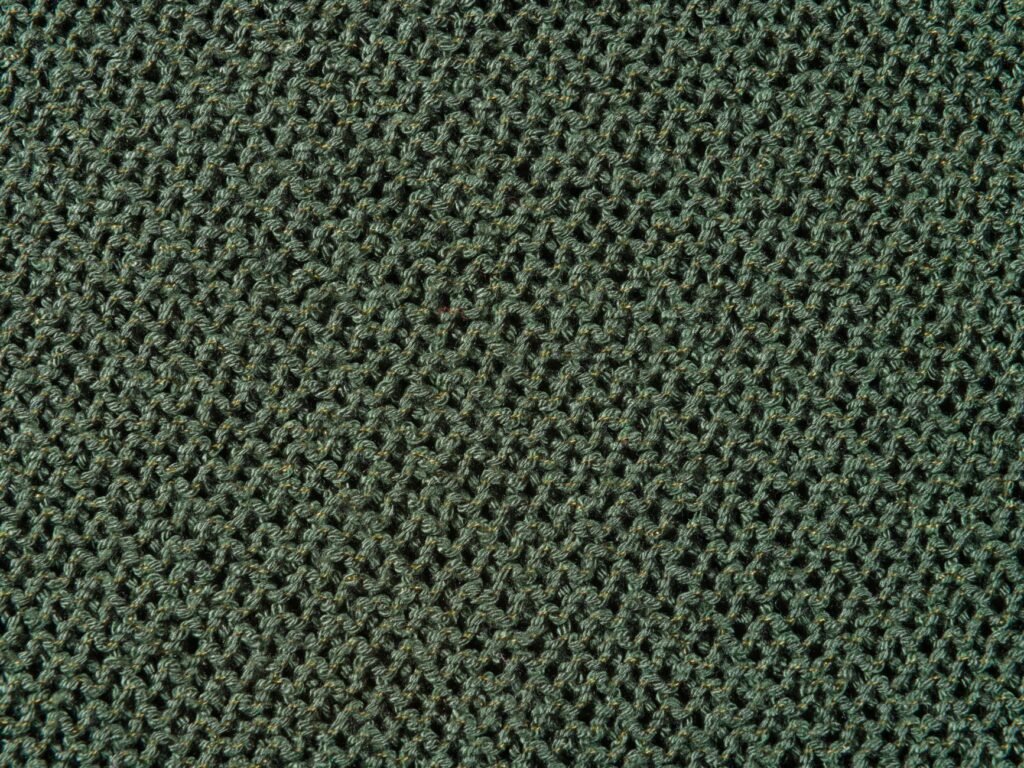
If you have ever read a pattern that suddenly says “work this round in the back loops only” and felt a small jolt of panic, take a breath. This is one of the easiest techniques in crochet once you actually see what it is asking you to do. It does not require a new stitch, a new tool, or any skill you have not already got. It just asks you to be a little more deliberate about where, exactly, your hook goes into the stitch. That small change is exactly what gives you ribbing on a beanie, a defined line around an amigurumi body, or a folded hem on a garment.
Jump to section
Every Stitch Has Two Loops
Look closely at any row or round of crochet, and you will notice that the top of each stitch is not a single flat line. It is a small V shape, and that V is made of two separate loops sitting side by side: one closer to you (the front loop) and one further away (the back loop).
When a pattern just says “single crochet in the next stitch” or “dc in each st” without any other instruction, it means work under both loops at once, the way you probably learned from the very start. Working under both loops is the default, and it is what most fabric is made of. Front loop only (FLO) and back loop only (BLO) are the two variations where the pattern wants you to insert your hook under just one of those two loops instead of both.
A few abbreviations worth having straight before we go further: st (stitch), sc (single crochet), dc (double crochet), FLO (front loop only), and BLO (back loop only).
How to Find the Front Loop and the Back Loop
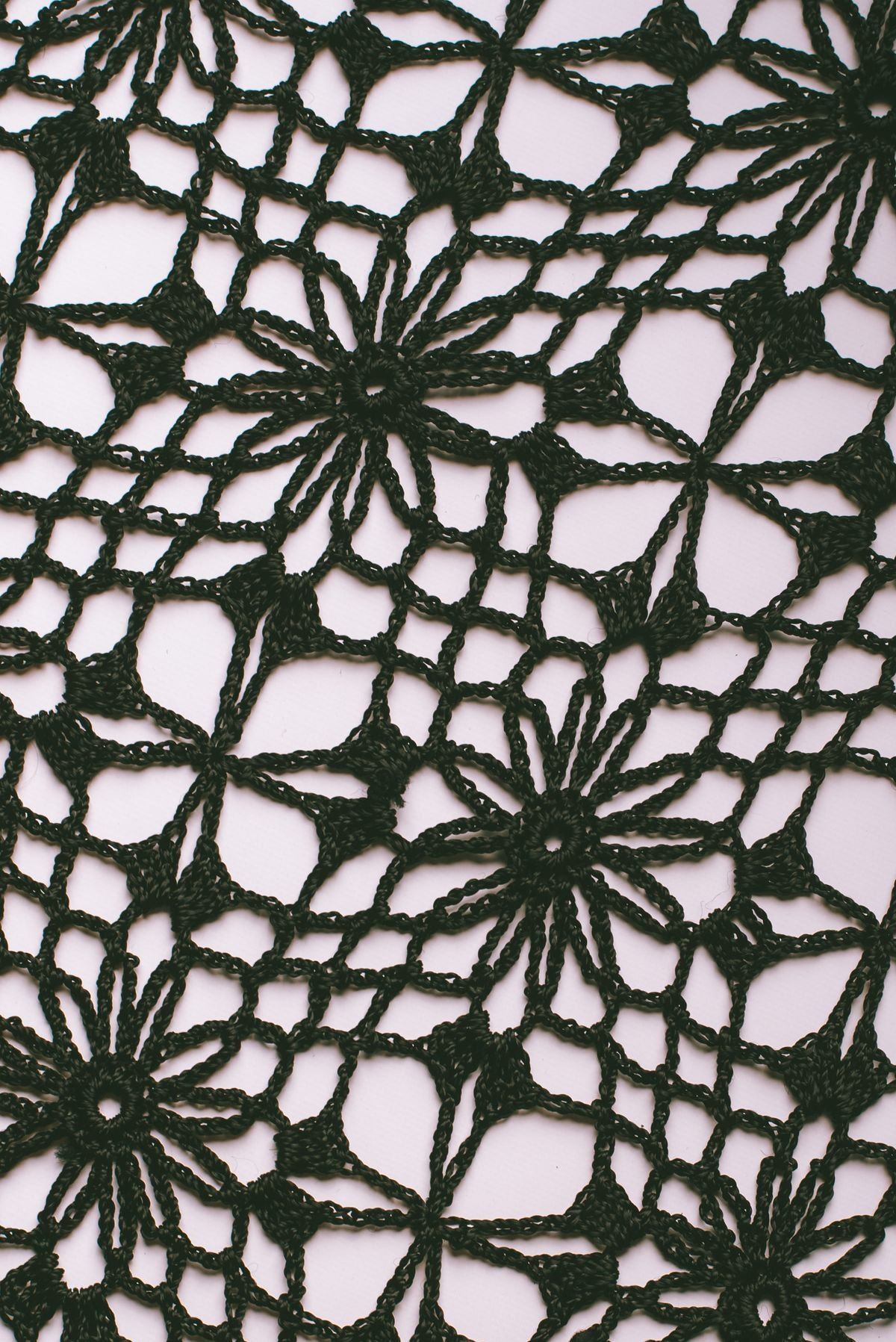
Hold your work with the stitches facing you, the same way you normally would while crocheting. Look at the top edge of the row or round you are about to work into. Each stitch’s V shape has:
- The front loop, which is the strand closest to you, nearer your body.
- The back loop, which is the strand furthest from you, on the far side of the V.
A helpful way to confirm you have it right: insert your hook under just the strand nearest you, and you are working the front loop. Insert it under just the strand on the far side, and you are working the back loop. If you insert it under both strands at once, the way you normally do, that is neither FLO nor BLO, that is just a standard stitch.
It can help to practice on a swatch before trying it in the middle of a real project. Chain a row, work a row of sc into both loops as usual, then on your next row, deliberately work into just the front loop of each stitch, and take a look at what is left behind.
What Front Loop Only (FLO) Does
When you work into the front loop only, the back loop of that row gets left completely unworked, and it stays sitting there as a small ridge or fold running horizontally across your fabric. That unused back loop is what creates the visible line.
FLO is often used when a pattern wants:
- A defined horizontal fold line, useful for turning a hem, a cuff, or a brim so it creases cleanly in one spot.
- A subtle decorative ridge running across an otherwise plain section of fabric.
Because the skipped loop is left standing rather than pulled tight, FLO fabric tends to look a little looser and more open along that row compared to working both loops.
What Back Loop Only (BLO) Does
Working into the back loop only leaves the front loop of that row unworked instead, and that unused front loop becomes a visible ridge running along the front of your fabric, similar in principle to FLO but on the opposite side.
BLO shows up constantly in a few specific situations:
- Ribbing. This is the big one. BLO worked over multiple rows creates a stretchy, textured fabric that looks and behaves a lot like knit ribbing, which is why so many crochet beanie and cuff patterns call for rows or rounds of hdc or sc worked in BLO. The unused front loops stack up into a series of parallel horizontal ridges, and the resulting fabric has noticeably more stretch than fabric worked under both loops.
- Brims and cuffs. Beanie brims, mitten cuffs, and sock cuffs often use BLO for the same stretch-and-ridge combination, so the edge hugs snugly without losing its shape.
- Amigurumi shaping. In amigurumi, BLO is frequently used on a single round, often right after finishing an increase round, to create a sharp, defined edge. This is a common trick for giving a head a visible “neck” line where it joins the body, or for adding a crisp transition between two color sections or two body parts.
Why This Small Choice Changes So Much
It is worth sitting with just how much a one-word instruction changes the outcome. The stitch itself, whether it is sc, hdc, or dc, does not change at all. You are making the exact same motions you already know. The only thing that changes is which strand of the V your hook slides under. And yet that tiny adjustment is the entire difference between a flat, uniform fabric and one with visible ribs, folds, or stretch built right in.
This is also why it matters to read a pattern’s stitch instructions closely rather than skimming them. “Sc in each st” and “sc in BLO of each st” will produce two visibly different results from the same yarn, the same hook, and the same number of stitches.
Try It on Your Next Project
The next time a pattern calls for FLO or BLO, resist the urge to skip past it or substitute a regular stitch out of uncertainty. Slow down for that one row or round, look for the V, choose the correct loop, and work it deliberately. It takes a few extra seconds per stitch the first time you try it and gets automatic almost immediately. Once you have made that ribbed brim or that crisp amigurumi neckline with your own hands, front loop and back loop stop feeling like a trick pattern writers use to confuse you, and start feeling like one more tool you get to reach for on purpose.
Frequently Asked Questions
What is the difference between front loop only and back loop only?
Front loop only (FLO) leaves the back loop of the row unworked, creating a ridge or fold on the back of the fabric, while back loop only (BLO) leaves the front loop unworked, creating a visible ridge on the front. Both use the same stitch; only which strand of the V the hook goes under changes.
Why do so many beanie patterns use back loop only?
BLO worked over multiple rows creates a stretchy, textured fabric similar to knit ribbing, which is why it is common for beanie brims, mitten cuffs, and sock cuffs that need to hug snugly without losing shape.
Does working in one loop change which stitch I use?
No. The stitch itself, whether sc, hdc, or dc, stays exactly the same. The only change is which loop of the V your hook goes under.
How do I know which loops to work into if a pattern doesn’t say?
If a pattern gives no other instruction, work under both loops, since that is the default that most fabric is made of.
— NoraEvery pattern hand-tested